
The Call That Starts the Argument
A typical service call starts the same way almost every time: one spouse thinks the garage door is broken and needs to be replaced, the other insists it just needs a quick fix, and both are half right. A technician shows up, looks at a door that's maybe 12 years old, and finds a spring that's simply worn out, not a door that's failing. Or the opposite — the spring is fine, but the door panels are rusted through at the bottom and the whole unit is sagging on its tracks. The lifespan question isn't one answer. It's really three separate questions: how long does the door itself last, how long do the springs last, and how long does the opener last. They wear out on completely different schedules.
How Long Each Part Actually Lasts
These are general ranges, not guarantees — actual lifespan depends heavily on use, maintenance, and weather exposure.
- The door itself (panels, hardware, track): Typically 15 to 30 years. Steel and aluminum doors tend to last longer than older wood doors, which were common in the original housing stock in this part of Connecticut and are more prone to swelling, cracking, and rot over time.
- Torsion springs: Rated in cycles rather than years — one open-and-close counts as a cycle. A standard spring is often rated for around 10,000 cycles, which works out to roughly 7 to 12 years for an average household opening the door a few times a day. Multi-car families or households that use the garage as the main entrance burn through that cycle count faster.
- The opener (the motor unit itself): Usually 10 to 15 years. Openers fail less from wear on moving parts and more from electrical issues — burned-out circuit boards, dead logic boards after a power surge, or motors that overheat from being asked to lift a door that's out of balance.
What Shortens All Three
Shoreline weather is hard on garage doors in ways that aren't always obvious. A few things to watch for:
- Freeze-thaw cycles: Water gets into small cracks in weatherstripping or seams, freezes, expands, and widens the damage. Repeat that all winter and seals fail years before they should.
- Road salt and salt air: Salt tracked in on tires or carried in humid coastal air accelerates rust on springs, hinges, rollers, and the bottom edge of steel doors — especially in homes close to the water.
- Humidity: Summer humidity swells wood doors and frames, and it also promotes rust on any hardware that isn't well-lubricated.
- Skipped maintenance: A door that's never had its hardware lubricated or its balance checked puts more strain on the opener motor, which shortens its life even if the door itself is fine.
- Temperature swings: Nor'easters and sudden cold snaps stress metal components and can make an already-weak spring snap without warning, usually on the coldest morning of the year.
What Actually Extends It
None of this requires replacing anything early — it just requires paying attention a couple times a year.
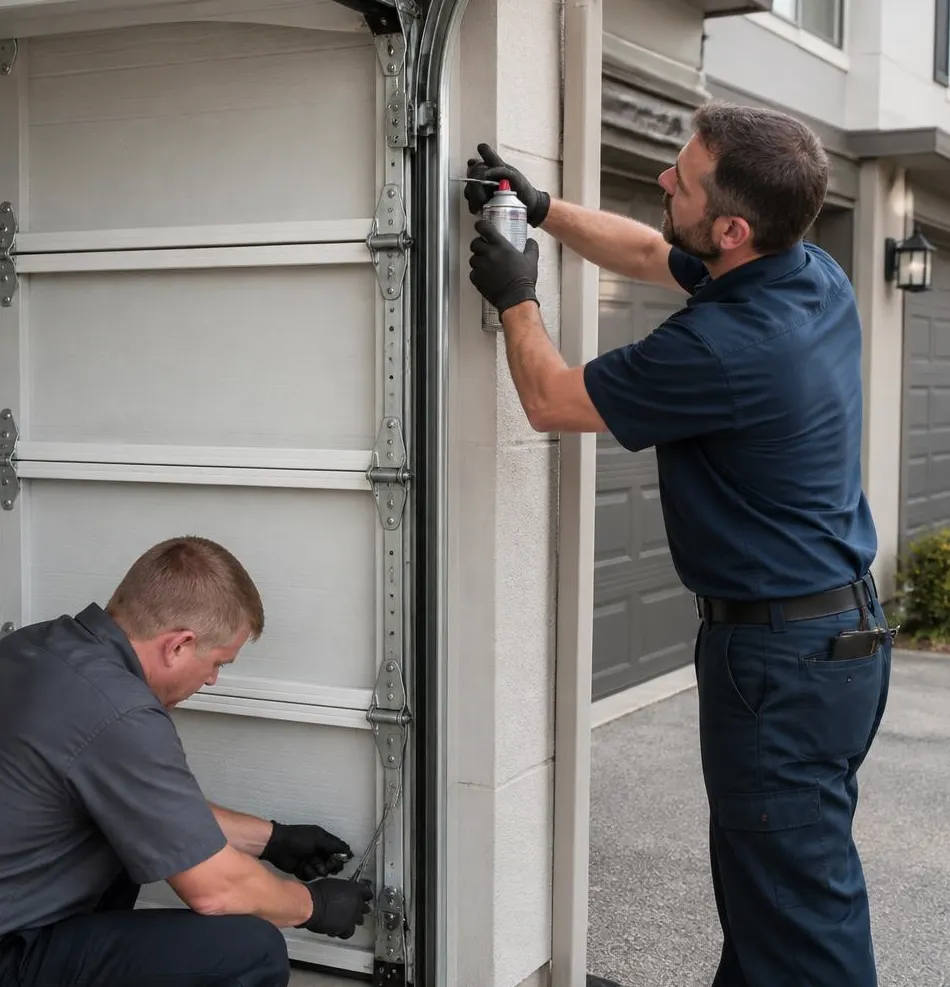
- Lubricate moving parts (hinges, rollers, the torsion spring itself) twice a year with a silicone-based lubricant, not grease, which attracts grit.
- Check the balance by disconnecting the opener and lifting the door halfway by hand. It should stay put. If it drops or shoots up, the springs are compensating poorly and wearing out faster.
- Replace worn weatherstripping before winter rather than after — it's a small job that prevents water and ice from working into seams.
- Keep the opener on a surge protector. Coastal storms bring power surges along with the wind, and a fried circuit board is one of the most common reasons an otherwise healthy opener dies early.
- Don't ignore small noises. A grinding roller or a squeal on opening is cheap to fix now and expensive to ignore until something breaks mid-cycle.
When to Call Guilford Garage Door
If a spring has already snapped, or the door is sagging unevenly, or an opener is making an effort but not actually lifting the door — those aren't maintenance jobs, they're repair calls, and springs under tension shouldn't be handled without the right tools. We handle Spring Replacement on torsion and extension springs for the exact cycle-based wear described above, and we offer Garage Door Maintenance visits that cover lubrication, balance checks, and weatherstripping before the freeze-thaw season really sets in. Either one settles the argument with an actual answer instead of a guess.
If your garage door or opener is acting up, or it's just been a few years since anyone looked at the hardware, call Guilford Garage Door — serving Guilford, CT and the shoreline towns nearby.